When Designer Jeremy Myerson was working at Heathrow Terminal 5, he discovered that older people didn’t always go to the toilet for the obvious reason: they went to hear flight announcements. “They have trouble listening to and reading information in large, busy, open concourses, while ceramic-clad toilets have perfect sound and close-up graphics.”
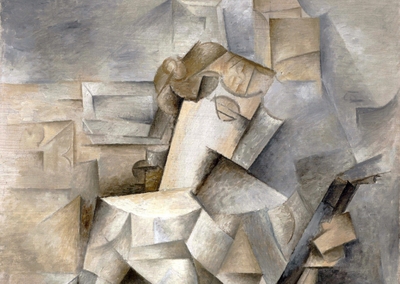
Cubism is considered one of the most innovative art movements of the 20th century. But it was a clear reformulation of a movement that came decades before: post-impressionism. For instance, the deconstruction of shapes into precise angles and distinct areas can be seen in the work of Paul Cezanne as early as 1885. Several years later, Cezanne used Bibemus Quarry to create the illusion of an object seen from multiple perspectives; challenging the traditional notion of singular perspectives that became a defining feature of Cubism. Picasso openly acknowledged the influence of Cezanne on his work, describing him as ‘my one and only master’.
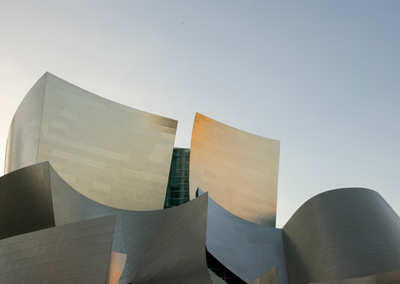
The unusual exterior of Disney Hall is iconic in the world of architecture, but it’s the result of strict limitations on internal design; Frank Gehry & Yasuhisa Toyota had to create a vineyard-style seating arrangement to make the audience feel close to the orchestra, and there are no boxes or balconies to avoid social hierarchies. As Toyota says, “surround style is more intimate.”
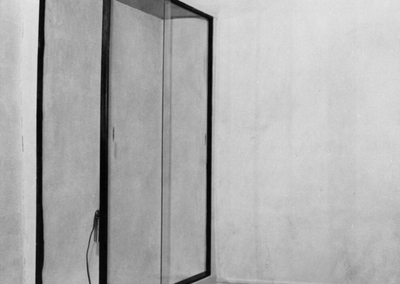
You wouldn’t pay much for empty space, unless of course it’s a groundbreaking work of art. A European collector recently paid $1.2 million for Yves Klein’s ‘Zone of Empty Space’ – not bad for something invisible.
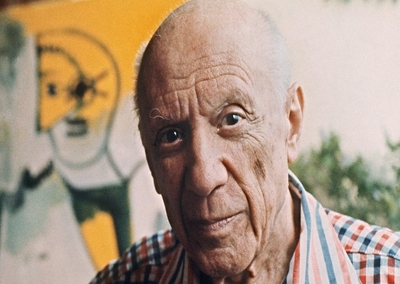
Some of the greatest artists in history – Picasso, Woody Allen, Kanye West – do things that are morally (and legally) wrong. Should we think of them as good or bad? In many cases, the answer is both.
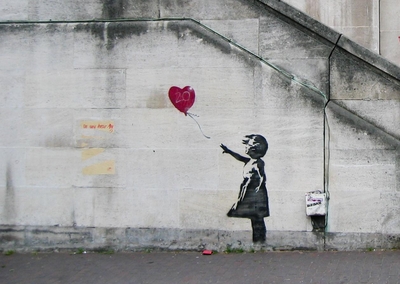
According to UK law, graffiti “is an act of criminal damage, and those found guilty can be punished with a maximum fine of £5,000.” But when Bansky does it, and tourists flock to see the work, it’s considered artistic genius.
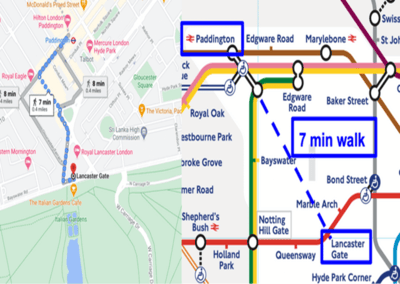
Harry Beck, the creator of the iconic London Underground map, was inspired by his training as an electrical engineer. Like his map, circuit diagrams don’t need to show actual locations of components, just where they are in relation to each other.
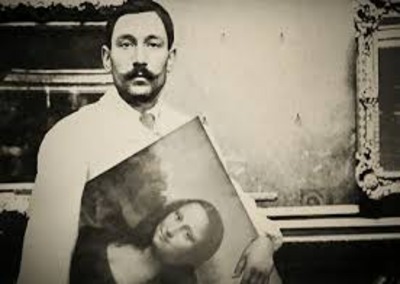
The Mona Lisa became the world’s most famous painting only after it was stolen. Before its theft in 1911, it was celebrated not widely known outside the art world. But its dissaperance prompted an international media frenzy and a frantic criminal investigation, and two years passed before it was discovered.
in 1901, Picasso imposed a self-constraint to boost creativity. His ‘blue period’ helped him produce paintings that conveyed a sense of melancholy and sadness, and killed the assumption that paintings required a range of vibrant colours to be successful.
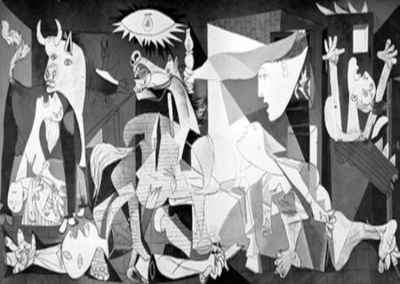
When pressed to explain the elements in Guernica, Pablo Picasso said: “This bull is a bull and this horse is a horse… If you give a meaning to certain things in my paintings it may be very true, but it is not my idea to give this meaning… I make the painting for the painting. I paint the objects for what they are.”
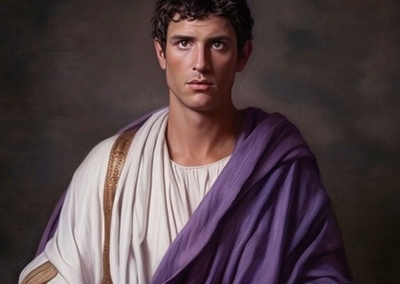
Purple clothes seem ordinary to us, but to the Ancient Greeks they symbolised power. Purple dye was incredibly hard to find – coming from a sea snail called the murex – so it was only accessible to emperors, priests, kings and judges. It wasn’t until 1856 that a British chemist found a synthetic version of purple, soon making it available to the masses.